READING & WRITING:
Chapter Ten – Show and Tell
Creating an animation is one problem, getting an audience is another. The internet is a great place for people to show their work, but there are also a lot out there to watch. Despite the wealth of options for viewership, there are steps an animator can follow to make sure their work gets seen.
Step 1: Package your project, meaning, get it ready to be viewed by people. With the internet, this means getting the video ready to post online and choosing what social media platform you want to post the video on. For my Moo Deng Dress Up Demonstration Animation, I will be posting it on my Vimeo profile because that is where I post most of my videos. I could also post it to my YouTube Channel as a public video, so the video would have the chance to be viewed on both websites.
Step 2: Create a network, start talking to other people about your work. The internet presents a great opportunity for billions of people to see your work, and this is not just referring to random people who just happen across your video. Just posting your content is not enough, you need to interact with others, so they notice you and your work.
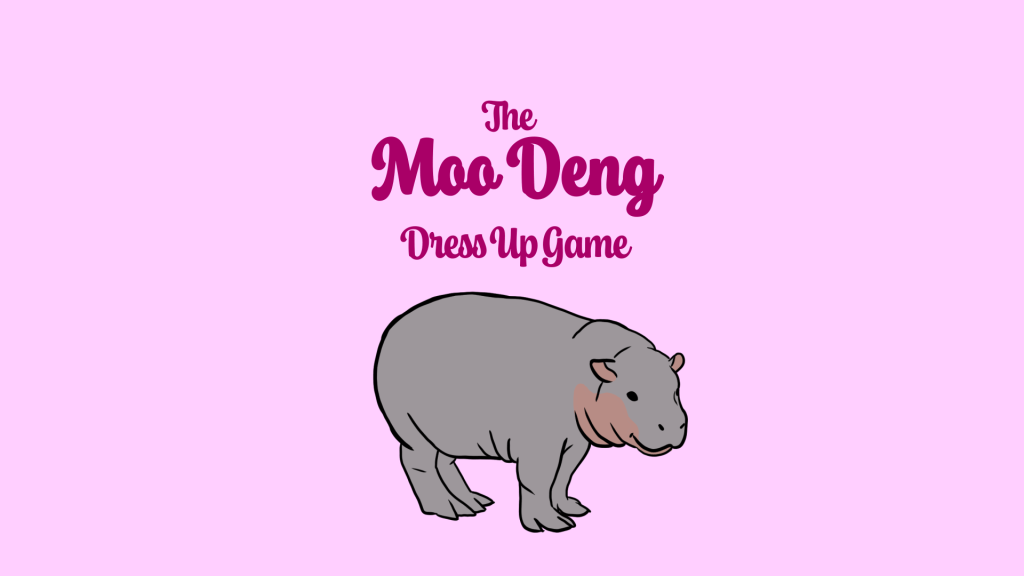
Join an online community of people with similar interests, talk to other creators about the work you’re doing, however you want to find people, talk to them and get them excited about your project. The more you interact with people, the more likely they are to see your work. Post teasers about your project to get people interested, but don’t give it all away at once. Get their interest with sketches and such first, so they come back later for more. If I was creating the Moo Deng Dress Up game, then the Demonstration Animation video would be a good teaser to get people interested. Alternatively, I could just post pictures of Moo Deng in the different outfit options to pique people’s interest.
Step 3: Start sharing your work and don’t stop sharing it! Once you join an online community, you want to stay active on it. You also want to interact with others in a way that portrays your professionalism to potential employers. While the concept of the Moo Deng Dress Up game is objectively silly, I can still interact with people about it in a professional manner.
Blazer, L. (2016). Chapter 10: Show and Tell. In Animated Storytelling: Simple Steps for Creating Animation and Motion Graphics (pp. 140–146). essay, Peachpit Press.
RESEARCH TO INFORM:
This is a fake infomercial from Canada that was made in the 90s, to inform children about thinking critically and fact checking what they see on TV. The first part is a rather convincing video about the common Canadian House Hippo. Masking was used to edit the hippo into the footage from the household. For real Canadian House Hippos are too elusive to ever be caught on camera.
This is a short from a YouTube series called Big Top Burger, from an independent animator who uses the screenname Worthikids. The animation is made in the application Blender and is done in 2D but is animated in a way that gives it the feeling of 3D. The motion overall is smooth, it has great use of staging and sound to create an engaging and funny short.
This is a short from Disney Channel that is a spoof of their “how to draw” videos by instead showing “how not to draw” character. This episode features characters from the Disney Channel show Gravity Falls. The short is not only a good example of live-action-animation with how the characters interact with the animator, but the short also uses 2D and 3D animation. The switch from reality to 3D is done seamlessly too.
This is the trailer for a documentary called “My Old School.” The documentary uses old footage, new footage, and animation to tell the story in an effective way. While the story itself is crazy enough to keep the viewer’s attention, the use of animation to add to the interviews gives the film a certain quirkiness. Not to mention, anything with Alan Cumming will be great, he honestly just has to stand there.
CREATE:
I struggled a bit at first with trying to decide what to do for my final project. There were a lot of different projects we did this semester which made it difficult to choose something, and there was also the temptation to try something new. I decided to go with something I know already, which is making another user interface demonstration animation.
In Chapter 10 of Animated Storytelling, it gives the advice to just embrace yourself when trying to network with real people. I applied this advice to develop an idea, I decided to just embrace my silliness! In prior projects when I did this, I enjoyed creating them a lot so I thought it would help me to enjoy this project a lot too.
I chose to do something with Moo Deng again because I just think she’s neat. As a kid I always really enjoyed playing dress up games (to be honest, I treat current RPG video games as dress up games too. How can you save the world if you’re not looking cute?) So, I had the idea to do a Moo Deng dress up game.
I enjoyed creating the little outfits for her. Originally, I had planned to show all the outfits, but I decided to just tease a few of them instead, to not only leave the viewers wanting more but to also make it a little easier on myself.
The toughest part of this was getting the timing of the mouse clicker moving to look natural, as well as getting the click sounds to be in sync with the movement.
I feel as though I learned a lot throughout this course from the creation of all the projects. This project, as simple as the animation in it is, I think is a good portrayal of what I learned throughout the course. It is not the most complicated animation, but it shows a clear and appealing idea. That idea may be a mini hippo in a top hat, but said mini hippo in a top hat can be presented in a professional manner.
 Home
Home 