An important aspect of filmmaking is lighting; without it, your viewer won’t be able to see a thing. Sometimes, a lack of lighting is used to evoke a certain mood, highlighting one thing over another.
These are purposeful uses of lighting, but being able to use light in such a way requires an understanding not only of the different types of lighting available for filmmaking, but also of how to use them effectively as you begin filming.
READING & WRITING
The Bare Bones Camera Course for Film and Video
Chapter 7 Lighting
Exterior lighting refers to the lighting you get when you are outside. It is the most powerful and common source of light because it is the sun. Most shots with exterior lighting have the subject facing the sun, which directly illuminates the subject’s face.
However, this is not always possible or desirable if the sun is shining too brightly on the subject or if perhaps the subject looks better with the sun behind them. Both situations can cause backlighting and sidelighting, which will cast strong shadows on the subject. When this happens, several tools are available to help.
A reflector, any item that reflects light, such as a silver-painted or foil-covered board or a white poster board, can be used to redirect light into shadow where needed.
Fill lights, any light that puts out daylight-colored light with a temperature of 5400K, can also be used to light overly shadowy areas.
Interior lighting refers to the lighting you get inside, provided by light bulbs. With interior lighting, there are three basic types using tungsten quartz halogen bulbs.
There is a focus quartz, a spotlight, controlled by a lever that controls the intensity and pattern of light. Its range is from spot, which covers a small, concentrated area, to flood, which covers a more spread-out area with less intense light. There are also broad lights, non-focusing lights that provide a broad, even light over a large area with no fine-tuning controls. As well as soft lights, a permanent, portable bounce light. These are convenient because they can be set up anywhere.
When it comes to setting up lights for film there is a basic lighting setup that is designed to create the best lighting possible for the subject. This type of basic lighting setup uses three points to illuminate the subject: a key light, a fill light, and a background light.
A key light is the main light that is placed to one side of the camera, usually at about a 45-degree angle above the subject. Since it is the leading light, it is the basis for the rest of your setup.
A fill light is placed on the opposite side of the subject from the key light and should be bright enough to partially fill in the shadows cast by the key light, leaving enough shadow to still have a sense of depth.
Finally, there is background lighting, or backlighting, which is light that falls on your subject’s head and shoulders from behind, creating a rim of light that visually separates them from the background. Having background light helps bring the background into the same illumination range as the rest of the scene, adding depth. That said, it is a good idea to have your background slightly darker than the key area.
Chapter 9 Doing It
When you begin planning to start shooting, there are some things to consider first: precisely what you want your final product to be (i.e., documentary, news story, mockumentary, etc.) The sort of story that you want to tell. Who your audience is and how you want them to react. What should be emphasized and what should be downplayed. These are essential to keep in mind as you review the location and talk with people.
Once you know the answer to all those questions, you are ready to create a shooting plan, which is where you decide exactly where your camera and subjects should be for each shot.
A helpful tool in editing to use while filming is a slate, a piece of identification, usually on a clap board or just a piece of paper, that has a scene number or description that is held in front of the camera for the first few seconds of a clip. This makes it easier to identify clips while editing them in post-production.
Other valuable tools while shooting include a shooting script, which is a list of every clip you plan to shoot and how you plan to shoot it, and a storyboard, a series of simple drawings that represent the shots you plan to get. Both tools can help ensure you get everything you need and visualize each scene.
Other tips discussed included filming scenes that require the same equipment placement altogether, rather than filming every scene in order. This saves not only continuity but also your time and energy from constantly changing the setup for each scene. The importance of communicating with your team so everyone feels involved is discussed.
As well as how, even in uncontrolled situations, it is possible to create great compositions. They can be achieved by regularly changing your camera angle and image size to construct basic sequences. Grabbing cutaways and b-roll whenever you can. Maintaining screen direction by using neutral shots to cover crossing the line. Even just letting the subject enter and exit the frame cleanly.
Schroeppel, T. (2015). Chapter 7: Lighting. In The Bare Bones Camera Course for Film and Video (3rd ed., pp. 81-90). essay, Allworth Press.
Schroeppel, T. (2015). Chapter 9: Doing It. In The Bare Bones Camera Course for Film and Video (3rd ed., pp. 111-117). essay, Allworth Press.
RESEARCH TO INFORM
This is a Vice News segment about Nyango Star, a heavy-metal drummer cat mascot for Kuroishi City, a rural farming community in Japan, where its population is aging and declining. Nyango’s marketing has brought attention not only to the apple farm he represents, but in effect has also got a boost to the town’s economy as tourists flock to see Nyango, they also end up buying from all the local farms too. The news segment includes plenty of fun b-roll with Nyango, as well as several different interviews with the farm owner, the mayor of Kuroishi, and Nyango’s marketing team to discuss how Nyango is marketed, as well as helping bring awareness about Kuroishi City. This video effectively uses both b-roll of Nyango, different marketing elements of b-roll, and interviews with people involved with Nyango to create an engaging news segment about this mascot.
This video is of The Grinch reading How the Grinch Stole Christmas. Despite the video being about The Grinch reading, there is also an “Off-Screen Narrator,” as in both movies, whom The Grinch fights before he begins to read…and after he begins reading too. The video effectively uses multiple cuts as The Grinch tells the story. Since the emphasis is supposed to be on The Grinch, more of him is shown than of any of the illustrations in the story, but the ones that are shown are shot from over The Grinch’s shoulder so that the viewer can see. Along with The Grinch’s grinchly commentary, other characters will also come on and interact with The Grinch, as mentioned, such as Max and Cindy Lou Who. All these elements come together to make a unique and engaging retelling of How the Grinch Stole Christmas.
This is a short film called Snow Bear, by animator Aaron Blaise. It follows a polar bear roaming the tundra in search of a friend. When he has trouble finding one, he decides to make another bear literally out of snow for a friend. He has a good time with his snow bear friend, that is, until the weather starts to melt him. I will not spoil the entire ending, but I will say it is a happy ending. The story has no narration; instead, it guides you visually as you see the polar bear travel and engage in different activities. The expressions of all the animals, even the snowbear, are well done, as are the sound effects of the noises they would make, helping them all communicate without ever actually speaking. Both the visuals and the sounds come together to tell this story effectively without any narration.
This is a short news segment from the Dodo about Pinto Bean, a dog who has taken the internet by storm for sword fighting with her people. The video mainly uses b-roll from the different videos Pinto’s people have posted about her. The narration is an interview with Pinto’s people, who explain how Pinto even came to pick up a sword and how it has changed all their lives. Pinto’s people talking about their experiences themselves helps to humanize the story. While I do think this video effectively uses b-roll and narration to tell the story, it would have been more personal to show Pinto’s owners as they were interviewed rather than rely entirely on b-roll.
CREATE
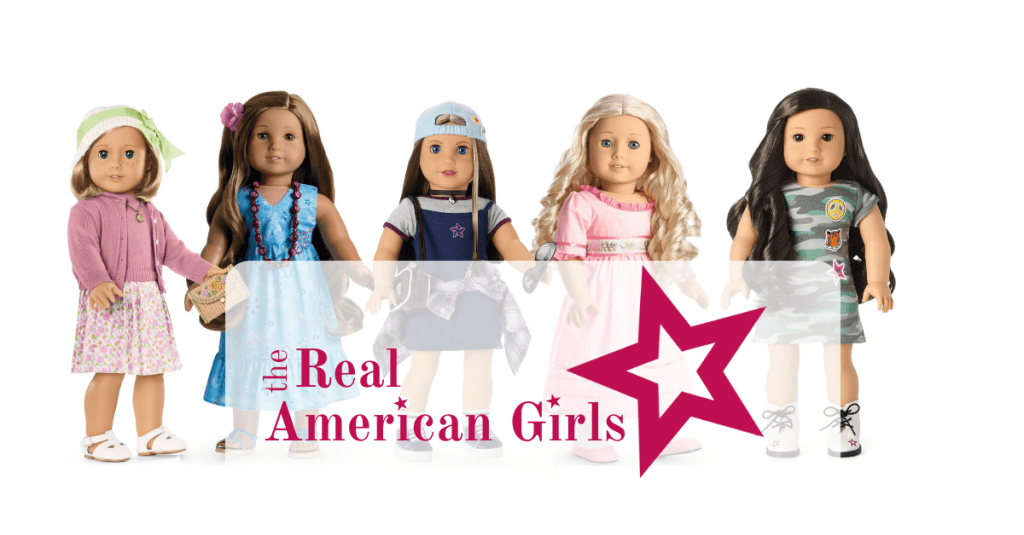
When given the challenge of creating a documentary/news story/narration of some sort, I immediately wanted to do something that is mockumentary style. I also wanted to do something different from the typical mockumentary, so I decided to go with a reality show. Because I think it will be funny, I decided to spoof reality shows like The Real Housewives with my American Girl Dolls.
Since I am using inanimate objects, one of the first things I decided to do was some motion tests. Not only did I want to make sure that I could achieve proper lighting for the talking heads, but I also wanted to figure out the best way to get the dolls to move on camera.
For the first test, I decided to take a close-up shot of the doll and try moving her myself. However, my hands are still in frame and can be seen moving her limbs. This breaks any illusion that she is moving herself.
For the next test, I used fishing wire to move one single limb. This worked well, but it only had limited movement.
For the last test, I did stop motion, which allows much more movement.
From testing, I decided to use a mix of the wire method and stop-motion to make it seem as if the dolls were moving on their own.
A challenge I had was writing the whole script. I had the basic idea for a mock-reality show with American Girl dolls a while ago, but writing out the story with that wasn’t easy. I wanted there to be drama, but I also did not want it to be too nasty. Depicting an American Girl doll being drunk is one thing, because the tone of this is supposed to be silly. But depicting the dolls as actually mean to one another does not feel silly or funny; it just seems mean. So instead, the drama these dolls have is things like stealing each other’s dresses, something light-hearted and fitting for dolls.
Another issue I ran into while getting my footage was that I lost the wire halfway through. It was the last of the wire I had, so I switched to a piece of white string to get the rest of the shots I needed. Which was not ideal, but it still worked out.
What I have been able to film for the project so far is get the footage I need, but I still need to record the voices, find the background music, sound effects, ambient audio, and both intro and outro music. The footage itself, without the audio, currently isn’t much to look at. Yet, with the addition of voices, background music, and sound effects when appropriate, the dolls will be brought to life in the video.
 Home
Home 